

How to Choose a LASIK Surgeon in Chicago: 7 Questions to Ask Before You Commit
Choosing to undergo LASIK is a major decision, but selecting the right surgeon may be even more important than the procedure itself. While LASIK has an extremely high patient satisfaction rate, successful outcomes depend heavily on careful patient screening, surgical expertise, and the technology used during treatment.
More than 95% of LASIK patients report satisfaction with their outcomes when surgery is performed on properly screened candidates. At the same time, responsible practices determine that approximately 15–20% of prospective patients are not ideal LASIK candidates after a comprehensive evaluation.
For patients researching LASIK in Chicago, understanding what questions to ask before choosing a surgeon can help you make a more informed and confident decision.
Why Surgeon Selection Is the Most Important LASIK Decision You'll Make
LASIK is not a one-size-fits-all procedure. The quality of your results depends on several critical factors, including:
- The thoroughness of your pre-surgical evaluation
- Your surgeon’s experience and specialization
- The accuracy of the laser technology used
- Whether underlying eye conditions are properly identified beforehand
A reputable LASIK practice should prioritize patient safety over procedure volume. In fact, practices with rigorous screening protocols regularly determine that some patients are better suited for alternatives such as PRK, EVO ICL, or continued use of glasses and contact lenses.
This screening process matters because certain eye conditions — including thin corneas, unstable prescriptions, severe dry eye disease, or early keratoconus — can increase the risk of complications if LASIK is performed on the wrong candidate.
Corneal ectasia, while rare, is one example of a serious complication that occurs most commonly in under-screened patients. According to the American Refractive Surgery Council, the condition occurs in approximately 1 in 166 LASIK patients.
That is why choosing an experienced surgeon who performs comprehensive evaluations is one of the most important steps in the LASIK process.
7 Questions to Ask Any Chicago LASIK Surgeon Before Booking
1. How Many LASIK Procedures Have You Performed?
Experience matters in refractive surgery. Surgeons who have performed thousands of LASIK procedures have typically encountered a wider range of prescriptions, corneal anatomies, and recovery scenarios.
During your consultation, ask:
- How long have you been performing LASIK?
- Approximately how many procedures have you completed?
- Do you specialize primarily in refractive surgery and corneal care?
An experienced surgeon should be comfortable discussing their background and explaining how they approach patient selection and surgical planning.
2. What Technology Platform Do You Use?
Not all LASIK technology is the same. Modern LASIK platforms often use femtosecond laser technology to create the corneal flap rather than a mechanical blade.
You may also hear terms such as:
- Bladeless LASIK
- All-laser LASIK
- Wavefront-guided LASIK
- Topography-guided LASIK
Ask your surgeon exactly which laser platform they use and why they selected it. You can also learn more about the advanced LASIK technology at Chicago Cornea Consultants before your consultation.
3. Do You Offer Topography-Guided LASIK?
Topography-guided LASIK uses detailed corneal mapping to customize treatment based on the unique surface characteristics of the eye.
One example is Contoura Vision topography-guided LASIK, which may improve visual quality for certain patients by addressing subtle corneal irregularities in addition to the glasses prescription itself.
Not every patient requires topography-guided treatment, but practices offering advanced customization options may be better equipped to tailor surgery to individual visual needs.
4. What Is Your Enhancement or Retreatment Policy?
Although LASIK is highly effective, some patients may require an enhancement procedure later if their vision changes over time or if a small residual prescription remains after healing.
Before booking surgery, ask:
- Are enhancements included?
- Is there a time limit for retreatments?
- What follow-up care is covered?
Understanding these policies upfront helps avoid unexpected costs later.
5. Is the Consultation Truly Free?
Some LASIK centers advertise “free consultations,” but apply consultation fees toward surgery costs or use consultations primarily as sales appointments.
A quality consultation should focus on:
- Determining candidacy
- Educating patients about risks and benefits
- Reviewing alternatives when appropriate
- Answering questions thoroughly
Patients should never feel pressured into booking surgery immediately after an evaluation.
6. Who Will Actually Perform the Surgery?
At some high-volume centers, the surgeon who performs the consultation may not be the same surgeon performing the procedure itself.
Ask directly:
- Will the surgeon I meet perform my LASIK?
- Will another provider participate in the procedure?
- Who handles follow-up care?
Continuity of care can make the surgical process more personalized and reassuring.
7. Do You Screen for Dry Eye, Thin Corneas, and Keratoconus?
Comprehensive screening is one of the most important signs of a responsible LASIK practice.
Your surgeon should evaluate for:
- Thin corneas
- Dry eye disease
- Keratoconus
- Corneal irregularities
- Unstable prescriptions
- Large pupil size
Patients with untreated dry eye or undiagnosed corneal conditions may experience poorer outcomes if these issues are not identified beforehand.
A surgeon willing to advise against LASIK when appropriate is often demonstrating a strong commitment to patient safety.
What Sets Board-Certified Cornea Specialists Apart from General Refractive Surgeons
Not all ophthalmologists have the same training background. Some eye surgeons perform LASIK occasionally as one component of a broader general ophthalmology practice, while others specialize extensively in corneal and refractive surgery.
Cornea specialists complete additional fellowship training focused specifically on:
- Corneal diseases
- Refractive surgery
- Complex corneal anatomy
- Advanced surgical techniques
This additional expertise can be especially valuable when evaluating patients with borderline candidacy factors, irregular corneas, or previous eye conditions.
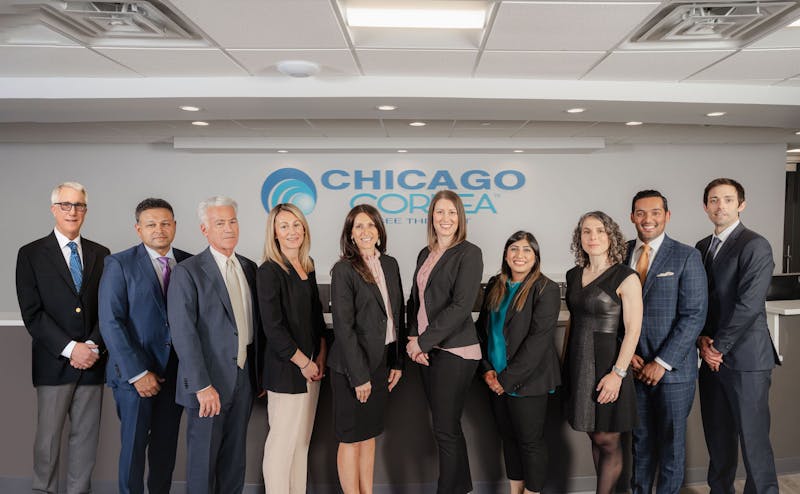
At Chicago Cornea Consultants, patients are evaluated by our board-certified cornea specialists, who specialize in the diagnosis and treatment of corneal and refractive conditions.
Red Flags When Comparing LASIK Centers in Chicago
When researching LASIK providers, certain warning signs may indicate a practice is prioritizing volume or marketing over individualized care.
Extremely Low Advertised Pricing
Some centers advertise unusually low LASIK prices that exclude:
- Follow-up visits
- Enhancement procedures
- Advanced technology fees
- Pre-operative testing
Always ask what is included in the quoted price.
High-Pressure Sales Consultations
Patients should feel informed — not pressured. Be cautious of practices that:
- Push same-day surgery scheduling
- Use aggressive financing tactics
- Minimize risks or complications
- Discourage second opinions
Practices That Rarely Screen Out Patients
Responsible LASIK providers understand that not everyone is an ideal candidate. If a center appears willing to approve nearly every patient for surgery without extensive testing, that may be a concern.
Vague “All-Laser LASIK” Claims
Marketing terms alone do not explain which technology is being used. Ask specifically:
- Which femtosecond laser platform is used?
- Is wavefront or topography-guided technology available?
- How is the treatment customized?
A reputable practice should be transparent about its equipment and surgical methods.
What Happens at a LASIK Consultation at Chicago Cornea Consultants?
A LASIK consultation is designed to determine whether the procedure is safe and appropriate for your eyes — not simply to schedule surgery.
During a consultation at Chicago Cornea Consultants, patients may undergo:
- Corneal mapping and topography
- Wavefront analysis
- Prescription stability evaluation
- Dry eye assessment
- Pupil size measurement
- Comprehensive eye health examination
These tests help identify whether LASIK is the best option and allow your surgeon to customize treatment planning based on your individual anatomy and visual goals.
Patients are encouraged to ask questions, discuss concerns, and fully understand both the benefits and limitations of LASIK before making a decision.
Choosing the Right LASIK Surgeon Starts with the Right Questions
LASIK can be life-changing for properly selected patients, but long-term satisfaction begins with choosing a surgeon who prioritizes safety, technology, and individualized care.
Taking the time to research credentials, ask detailed questions, and understand the consultation process can help you feel more confident before moving forward with surgery. A thorough evaluation from an experienced cornea specialist is one of the best ways to protect your vision and achieve the best possible outcome.