

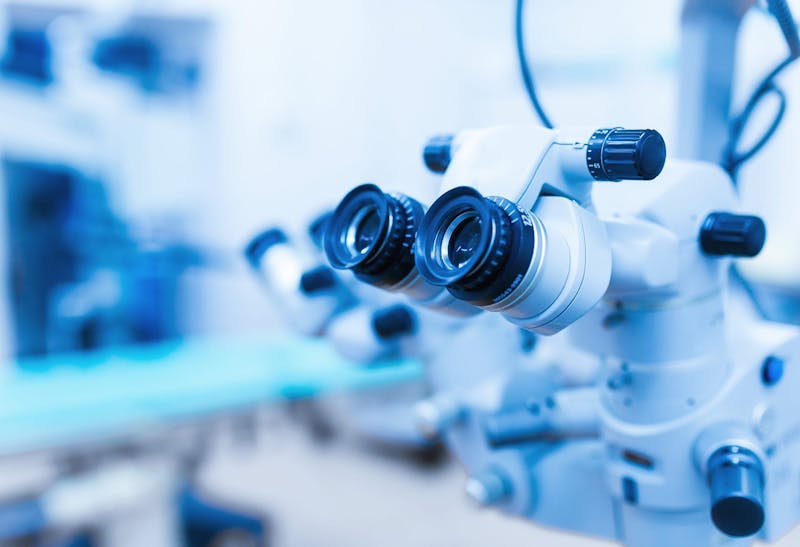
At Chicago Cornea, our surgeons have spent decades at the forefront of refractive surgery, performing over 50,000 successful procedures for patients across the Chicago area. As pioneers in the field, we understand that "visual freedom" isn’t a one-size-fits-all solution. Whether we are utilizing the precision of the Zeiss VisuMax laser for LASIK or the advanced biocompatibility of the EVO ICL, our goal is to provide an individualized treatment plan backed by peer-reviewed clinical excellence and state-of-the-art technology.
Choosing between LASIK and ICL is a significant decision. Below, we break down the nuances of each procedure to help you understand which path might be right for your unique eyes.
LASIK: The Gold Standard for Precision
LASIK (Laser-Assisted In Situ Keratomileusis) remains the most popular elective procedure in the world for correcting nearsightedness, farsightedness, and astigmatism.
-
How it Works: Using the Alcon WaveLight refractive suite, our surgeons create a thin, precise flap in the cornea. An excimer laser then reshapes the underlying corneal tissue to correct your refractive error.
-
The Recovery: One of the primary benefits of LASIK is the rapid turnaround. Most patients return to their normal daily activities—and see with significantly improved clarity—within 24 hours.
-
Ideal Candidates: LASIK is generally best for patients with stable prescriptions and sufficient corneal thickness.
EVO ICL: The "Additive" Alternative
The EVO ICL (Implantable Collamer Lens) is a breakthrough for patients who may have been told in the past that they weren't candidates for laser vision correction.
-
How it Works: Unlike LASIK, which removes corneal tissue, the ICL is an "additive" procedure. A small, flexible lens made of biocompatible Collamer—a material that works in harmony with your eye’s natural chemistry—is inserted behind the iris.
-
The Benefits: Because the ICL does not involve reshaping the cornea, it is an excellent option for patients with thin corneas or those prone to dry eye syndrome. It also provides a layer of UV protection and, notably, is a reversible procedure if ever medically necessary.
-
Ideal Candidates: Patients aged 21 to 45 with moderate to high myopia (nearsightedness) often find the ICL provides the high-definition vision they’ve been seeking.
Side-by-Side: Key Considerations
|
Feature |
LASIK |
EVO ICL |
|
Method |
Subtractive (Reshapes cornea) |
Additive (Lens implant) |
|
Recovery |
Very fast (approx. 24 hours) |
Fast (usually 1-2 days) |
|
Corneal Thickness |
Requires adequate thickness |
Not a factor |
|
Reversibility |
Permanent |
Removable by a surgeon |
|
Treats |
Myopia, Hyperopia, Astigmatism |
Moderate to High Myopia |
Which Is Right For You?
Determining the "better" procedure depends entirely on your ocular anatomy and lifestyle goals. If you have a high degree of nearsightedness or thin corneas, the EVO ICL offers a sophisticated solution that preserves corneal integrity. If you have a standard prescription and desire the quickest possible return to your routine, LASIK may be the ideal choice.
Trust Your Vision to Chicago’s Experts
The most critical step in your journey toward visual freedom is a comprehensive evaluation. At Chicago Cornea, our team of "Top Doctors" uses advanced diagnostic imaging to map your eye with incredible detail. This ensures that the recommendation we make—whether it be LASIK, ICL, or PRK—is the safest and most effective option for your long-term health.
Experience the confidence that comes with being treated by some of the most respected corneal specialists in the country. Schedule your consultation at one of our Chicago, Highland Park, or Hoffman Estates offices today.